



Featured in

















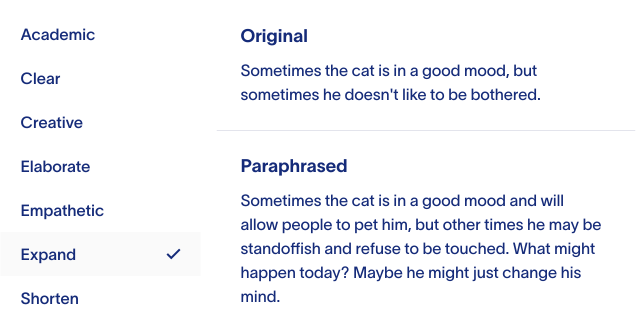
Paraphrase variations in 18 writing modes
Your words and thoughts matter, and we’ve designed our paraphrase tool to ensure find the best words to match your expression. Just paste or start writing your text in our input box above, and our best in class AI will help you to generate the best paraphrases from your original writing.


Write 10x faster with keywords in Compose mode
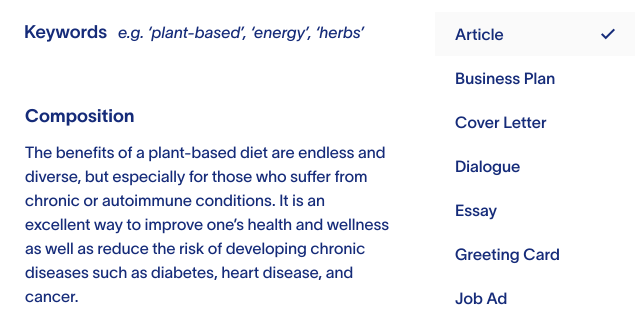
Who has time for writer’s block? Our Composer can help you write 10x faster by enabling you to create paragraphs from keywords instantly for articles, cover letters, essays, and more than 500 other types of writing in 100+ Languages. This way you can focus more on your final work rather than your first draft.


Check plagiarism in 50+ languages
None of us wants to accidentally plagiarize, especially when we spend so much time getting our ideas on paper and refining them. Be sure that your text is unique and 100% FREE of plagiarism by using our plagiarism checker for 50+ languages.
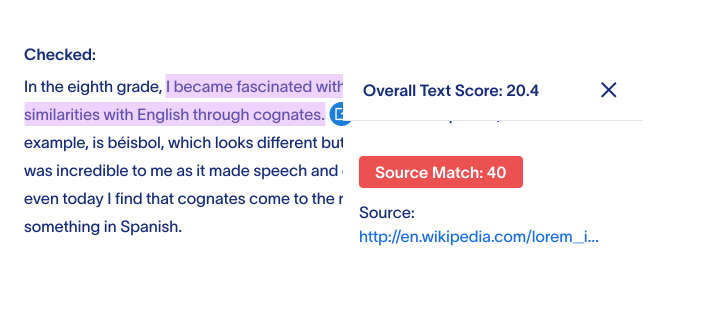
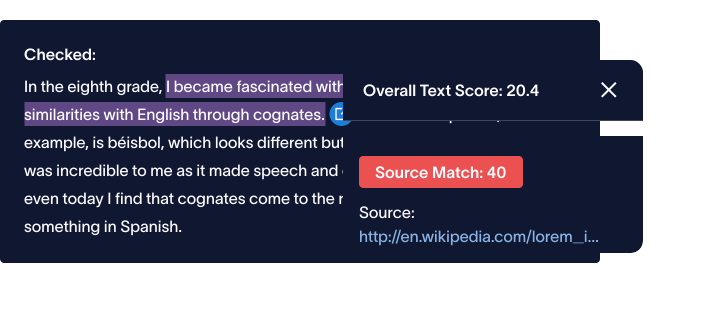


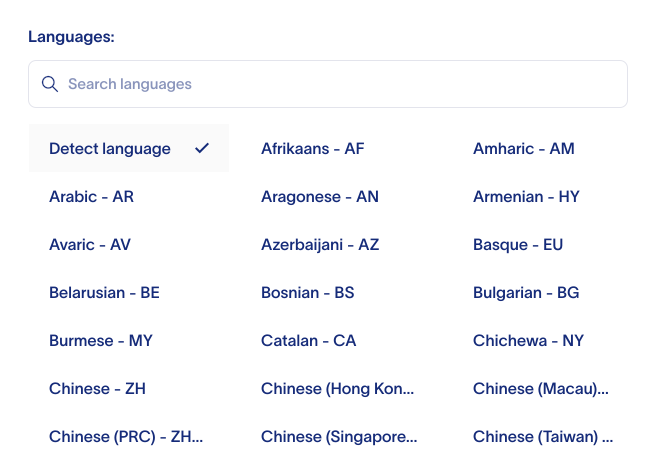
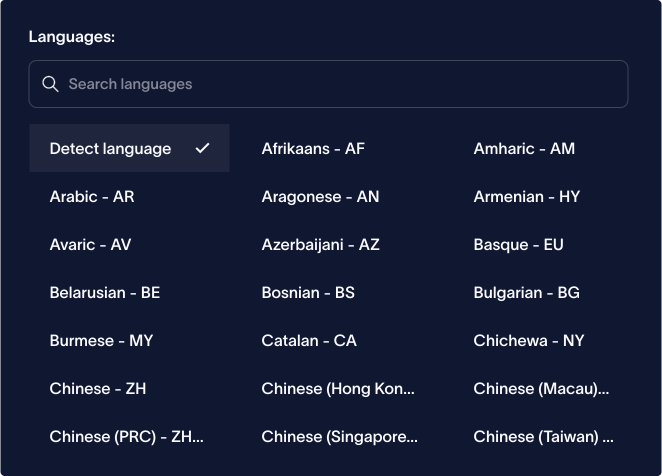
Rephrasely uses state-of-the-art AI to paraphrase and compose in more than 100+ languages
Rephrasely uses state-of-the-art AI to produce variations of your text in more than 100+ languages for each of the eighteen (12 free and 6 premium) styles that we offer. By doing this, we are able to offer more value and variety than any other service.
Unlock your writing
Switch plans or cancel anytime.
All plans include:
Monthly
Billed every month
Annual
$59.88 billed every 12 months
Prepay Credits
What Does a Comma Checker Review?
A comma checker scans your writing for comma-related errors: missing commas, unnecessary commas, comma splices, and commas placed in the wrong position. Comma mistakes are among the most common punctuation errors in English, and they can change the meaning of a sentence or make it harder to read.
Common Comma Errors
Missing Commas After Introductory Elements
When a sentence opens with a dependent clause, transitional phrase, or prepositional phrase, a comma should follow. "After the meeting ended we went to lunch" needs a comma after "ended." Without it, readers may initially parse "ended we" as a unit, causing a brief stumble.
Comma Splices
A comma splice joins two independent clauses with just a comma: "The report is finished, I'll send it tomorrow." Fix this with a semicolon, a conjunction, or by splitting into two sentences: "The report is finished. I'll send it tomorrow."
Missing Serial Commas
In lists of three or more items, the serial (Oxford) comma before "and" prevents ambiguity. "I thanked my parents, Batman and Wonder Woman" could mean your parents are superheroes. Adding a comma after "Batman" clarifies the list.
Unnecessary Commas
Extra commas clutter writing and can distort meaning. Common spots: between a subject and its verb ("The manager, approved the budget"), before "that" in restrictive clauses, and after conjunctions that don't introduce pauses.
How to Use This Tool
Paste your text above to identify comma errors throughout your document. Each flagged issue comes with an explanation of the rule and a suggested fix so you can learn the pattern, not just correct the instance. Works with emails, essays, reports, and any text where punctuation accuracy matters.
Related Tools
Try our grammar checker to catch errors automatically, or use the paraphrasing tool to improve sentence clarity.