



Featured in

















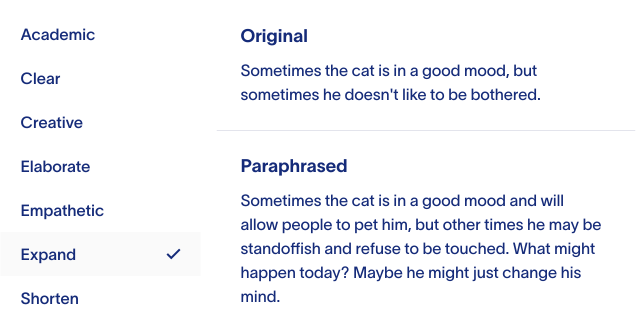
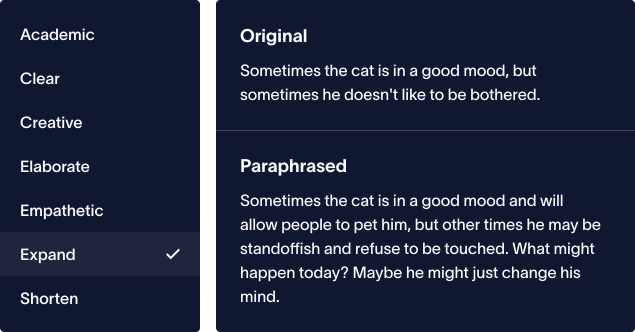
Paraphrase variations in 18 writing modes
Your words and thoughts matter, and we’ve designed our paraphrase tool to ensure find the best words to match your expression. Just paste or start writing your text in our input box above, and our best in class AI will help you to generate the best paraphrases from your original writing.


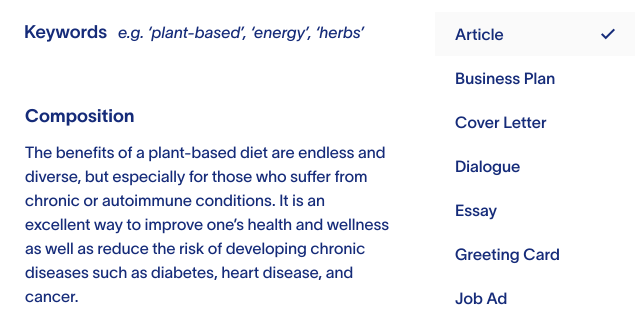
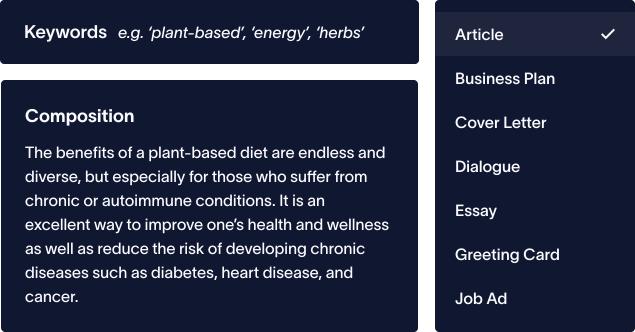
Write 10x faster with keywords in Compose mode
Who has time for writer’s block? Our Composer can help you write 10x faster by enabling you to create paragraphs from keywords instantly for articles, cover letters, essays, and more than 500 other types of writing in 100+ Languages. This way you can focus more on your final work rather than your first draft.


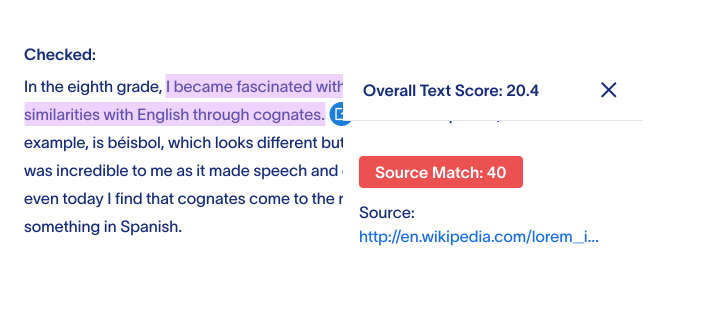
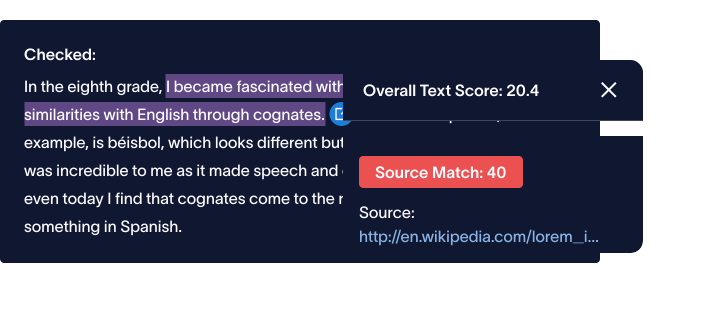
Check plagiarism in 50+ languages
None of us wants to accidentally plagiarize, especially when we spend so much time getting our ideas on paper and refining them. Be sure that your text is unique and 100% FREE of plagiarism by using our plagiarism checker for 50+ languages.


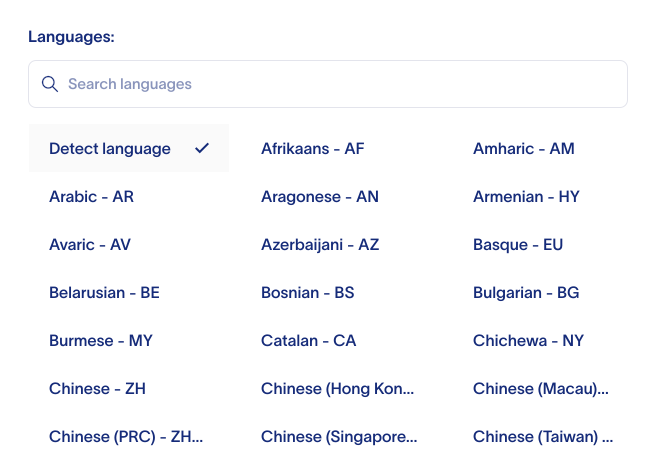
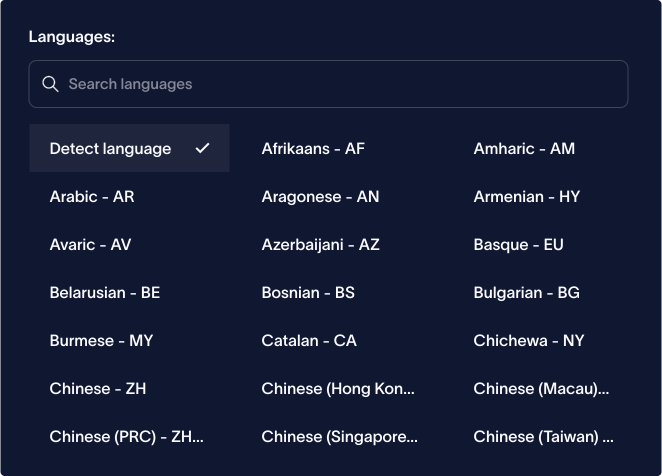
Rephrasely uses state-of-the-art AI to paraphrase and compose in more than 100+ languages
Rephrasely uses state-of-the-art AI to produce variations of your text in more than 100+ languages for each of the eighteen (12 free and 6 premium) styles that we offer. By doing this, we are able to offer more value and variety than any other service.
Unlock your writing
Switch plans or cancel anytime.
All plans include:
Monthly
Billed every month
Annual
$59.88 billed every 12 months
Prepay Credits
What Is the Incomplete Synthesis Fallacy?
The incomplete synthesis fallacy occurs when an argument draws a conclusion from only part of the available evidence, ignoring data that contradicts or complicates the claim. Also called "cherry-picking" or "the fallacy of incomplete evidence," it produces conclusions that look well-supported on the surface but collapse when the full picture is considered.
For example, a company might claim "customer satisfaction increased 20% this quarter" while omitting that the survey response rate dropped by half, meaning the results come from a smaller and potentially biased sample.
How This Fallacy Appears in Writing
Selective Data Presentation
Presenting only statistics that support your position while leaving out contradicting numbers. An essay arguing that a policy worked might cite three studies showing positive outcomes and ignore five studies showing no effect or negative results.
One-Sided Source Selection
Drawing exclusively from sources that agree with the thesis. A balanced argument acknowledges opposing evidence and explains why the conclusion still holds despite it.
Ignoring Context and Limitations
Citing a finding without mentioning the conditions under which it was observed or the limitations the original researchers noted. A study's results may apply only to a specific population, time period, or set of circumstances.
How to Fix Incomplete Synthesis
- Actively search for evidence that contradicts your thesis and address it directly.
- When citing statistics, include the sample size, methodology, and any caveats the source mentions.
- Acknowledge limitations in your own argument rather than pretending they don't exist.
- Present counterarguments and explain why your conclusion still holds despite them.
Paste your text into the checker above to identify passages where evidence may be selectively presented or where counterpoints are missing from the argument.
Related Tools
Try our grammar checker to catch errors automatically, or use the paraphrasing tool to improve sentence clarity.